
Extended Biography of Dr. Hugh Brown, PhD
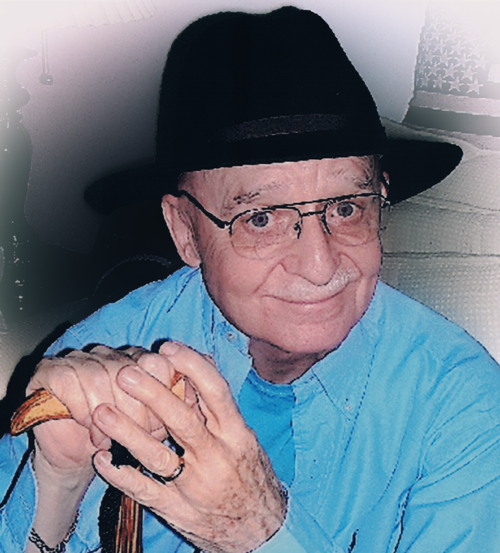
Dr. Hugh Brown, PhD (March 30, 1933 – March 30, 2014) was an American neuroscientist, pharmacologist, psychopharmacologist, author, and educator whose career spanned research, teaching, clinical neuropsychology, and the arts.
After serving in the U.S. Army, Hugh Brown enrolled at the University of Maryland as part of the Class of 1957, graduating with a Bachelor of Science in Zoology and a double minor in Chemistry and Psychology. He financed his education using the GI Bill and also worked part-time at the Potomac Electric Power Company (PEPCO) in Washington, D.C., where, after an apprenticeship, he became an electrician specializing in electric meter repair.
Following graduation, Brown moved to Philadelphia, Pennsylvania, where he accepted a position as a "junior pharmacologist"—in reality, a research laboratory technician—at Smith Kline & French, now known as GlaxoSmithKline. He was assigned to the laboratory of Dr. Bryce Douglas, a noted pharmacognosist renowned for his work in the study of plant-derived drugs. The lab focused on identifying plants containing therapeutic psychoactive compounds, sourcing specimens from Central and South America, Africa, Asia, and the United States. Brown often participated in field collection trips and assisted with laboratory testing aimed at isolating active compounds for efficacy trials.
Under Dr. Douglas’s mentorship, Brown gained extensive experience in pharmacology, chemistry, behavioral science, botany, and research methodology—knowledge that far surpassed traditional academic instruction. However, he quickly recognized that advancement beyond a technical position would require advanced degrees.
In 1961, Brown was accepted as a graduate student in pharmacology at the University of Pennsylvania. However, just before the semester began, he learned that the University of Maryland had received a multimillion-dollar grant to establish a graduate training program in psychopharmacology. Based on his research background, he was accepted into the program on the spot, bypassing typical admissions requirements. He was awarded a U.S. Public Health Fellowship and conducted research at the College Park campus while also attending classes at the Medical and Pharmacy Schools in Baltimore.
His graduate advisor was Dr. Joseph V. Brady, a U.S. Army major known for the “ulcers in executive monkey” studies. Brown’s thesis focused on the effects of drug interactions, and during his time in the program, he published his first scientific journal article. In 1963, he earned his Master of Science in psychopharmacology, becoming the second graduate of the newly established program.
Although he initially intended to pursue a doctorate immediately, personal and financial considerations delayed those plans. Instead, he accepted a position with Abbott Laboratories in North Chicago, Illinois, where he was tasked with developing a psychopharmacology lab from scratch. The project was part of a subcontract with FMC Corporation and the U.S. Army's Chemical Research and Development Laboratories at Edgewood, Maryland, focused on creating non-lethal incapacitating agents for military use during the Vietnam War.
The classified nature of the work, the need for specialized aerosol delivery systems, and internal resistance at Abbott presented significant challenges. Nonetheless, Brown assembled a functioning, state-of-the-art psychopharmacology lab within 90 days and led a four-year research program that met all project goals. During this time, he authored several peer-reviewed journal articles and collaborated with distinguished scientists including Dr. Richard K. Richards and Dr. Hugo Stange. He also began a close professional relationship with Dr. Henry B. Murphree of Rutgers Medical School, who later served on his doctoral committee.
While at Abbott, Brown married his secretary, Louise, in 1966, and became stepfather to her daughter, Barbara. Their family grew and later included a grandson, Brian, who graduated from Embry-Riddle Aeronautical University in 2004 and pursued a career in aviation.
After four years at Abbott, Brown realized that his professional advancement was limited by his lack of a doctorate, despite his substantial research accomplishments. He resumed his academic path, ultimately choosing the University of Manitoba in Winnipeg, Canada, where he taught undergraduate psychology at St. Paul’s College while simultaneously pursuing his doctorate in pharmacology and psychology.
At the University of Manitoba, Dr. Brown expanded his teaching to include psychology, pharmacology, and pharmacognosy across multiple institutions, including the Medical School, the School of Physical Therapy, and the St. Boniface Hospital Nursing School. His dissertation, supervised by Dr. George Halaz—an expert in hallucinogenic drugs—and Dr. Kenneth Hughes, a pioneer in molecular neurobiology, focused on developing behavioral methods to determine the mechanisms of action for unknown drugs through combinations of known substances.
In 1970, Brown earned his PhD and was officially appointed as a professor at St. Paul's College. During this time, he began writing his seminal textbook, Brain & Behavior, which was published by Oxford University Press in 1976. It was the first book of its kind to include a dedicated chapter on drugs and pharmacology. The work was praised for its clarity, accessibility, and thought-provoking illustrations—all created by Brown himself. A Spanish edition, Cerebro y Comportamiento, was released in 1982 and became a bestseller across Latin America and the Caribbean, widely adopted as a university textbook, including in Cuba.
During the 1970s, Dr. Brown conducted groundbreaking research on tetrahydrocannabinol (THC)—the active ingredient in marijuana—under a grant from the Canadian Food and Drug Directorate in collaboration with Israeli scientists. This research attracted media attention and led to two scientific journal publications. His work came to the attention of President Nixon’s staff during the administration’s declared "War on Drug Abuse." Although Brown did not consider himself an expert in substance abuse, he was recruited to help establish the National Drug Abuse Training Center at the University of Miami.
In 1971, Dr. Brown relocated to Miami, Florida, to serve as Director of the new center. To better understand the field, he conducted an intensive self-education effort, visiting treatment centers, interviewing users, and riding with law enforcement agents. He developed a comprehensive curriculum that spanned paraprofessional credentialing, undergraduate and graduate coursework, and training for physicians, nurses, EMTs, and law enforcement personnel. He was appointed Associate Professor at the University of Miami Medical School, where he taught pharmacology courses and supervised graduate theses and dissertations. He also co-edited a widely used 650-page anthology on substance abuse for the National Institutes of Health.
After the training center closed in 1975—coinciding with President Nixon’s resignation—Brown remained in academia. He accepted an adjunct professorship at the University of Miami and a full Associate Professorship in psychology at the newly established North Miami campus of Florida International University (FIU). There, he taught psychology, pharmacology, and even a course on Human Sexuality that garnered attention, including mention in Playboy magazine.
By 1979, despite holding tenure, Brown began to tire of academic life. Encouraged by Dr. Ronald Tikofsky, Chairman of FIU’s Psychology Department, he transitioned into the emerging field of clinical neuropsychology, which required licensure and a clinical internship. With assistance from Dr. Tikofsky, Brown secured an internship at the Veterans Administration Medical Center and Boston University Medical School under the mentorship of Dr. Edith Kaplan, a pioneer in the field.
Brown and his wife, Louise, relocated to Brockton, Massachusetts. With no stipend available, Louise returned to work as an executive secretary, while Brown trained under Dr. Kaplan, evaluating hundreds of brain-injured patients. Despite the demanding nature of the internship, the couple explored the Boston area on weekends and enjoyed the local cuisine. Although they had planned to remain in Massachusetts, a new opportunity arose in Miami.
St. Thomas University, a newly formed Catholic institution in North Miami, invited Dr. Brown to help establish their psychology department. Though it delayed his formal transition into clinical neuropsychology, the role brought him back to Florida, where the couple had a home and family ties. In 1983, his mother passed away at the age of 95, and was interred alongside his father in Maryland.
Within a few years, St. Thomas University had developed a robust psychology program, allowing Brown to resume his clinical career. The family moved to Hollywood, Florida, and Brown became licensed and entered private practice with a neurologist in Hallandale. Although professionally rewarding, the arrangement was ultimately not ideal. Given the national shortage of neuropsychologists, he received offers from across the country, including Hawaii, but ultimately accepted a position with Sandybrook, a 36-bed brain injury rehabilitation facility in Mount Dora, Florida.
Mount Dora, a scenic and arts-focused town northwest of Orlando, became the Brown family's permanent home. Brown found the area’s charm, art festivals, and proximity to nature a perfect fit. At Sandybrook, owned by the Rebound Corporation, he received strong support from administrators to pursue professional development. He completed board certifications with the American Board of Vocational Neuropsychology (ABVN) and the American Board of Medical Psychotherapists and Psychodiagnostics (ABMPP), and was listed in the prestigious National Register of Health Service Psychologists. He also became a Professional Member of the American Academy of Neuropsychology.
Working alongside Dr. Jonathan Chambers, a neuropsychiatrist from the University of North Carolina Medical School, Brown conducted research on pharmacological treatments for brain injury, producing several scientific publications. He became a Charter Member of the Prescribing Psychologists’ Register, completing all coursework toward gaining prescriptive authority, with the exception of the clinical internship.
In 1993, a powerful storm known as the “Storm of the Century” devastated Mount Dora and destroyed the Sandybrook facility. Although no lives were lost, the facility never reopened. Instead, it was converted into a school for emotionally disturbed deaf children. Brown chose to remain in Mount Dora and built a small home for his retirement years.
He established a private practice near downtown Mount Dora, which he maintained for 14 years until retiring in 2007 at the age of 74. His later work focused on evaluations for Social Security, workers' compensation, and vocational rehabilitation. Known for his compassionate and effective work with children, he conducted many assessments for ADHD and learning disabilities. Over time, he phased out litigation-based evaluations in favor of non-adversarial assessments.
In addition to his scientific and clinical achievements, Dr. Brown was also a talented visual artist. His passion for art dated back to high school, where he was encouraged by a young art teacher, Miss Griffin. Though he hoped to pursue formal art training, his father discouraged the idea. In a pivotal moment, Brown's father, a medical doctor himself, arranged for a well-known portrait artist—one of his patients—to critique Brown's work. The artist dismissed Brown’s paintings as talentless, which devastated him and led to a long hiatus from painting.
Years later, Brown would learn from his mother that the artist’s judgment had been prearranged at his father’s request, out of concern for his son’s future. Despite this setback, Brown’s artistic desire never faded. After returning from the Army, he was offered an opportunity to study animation at the University of Southern California by a wealthy relative. However, still influenced by his late father’s wishes, Brown declined and chose a path in medical science.
Throughout his life, Brown continued to paint as a hobby. In Mount Dora, he transitioned from oil painting to watercolors, challenging himself with a medium often regarded as technically demanding. He focused primarily on local landscapes and scenes, and in 1994, decided to test his talent publicly by entering two watercolor pieces in the Central Florida Juried Art Competition at the Mount Dora Center for the Arts. To his surprise, both paintings were accepted—an unprecedented accomplishment—and both earned honorable mentions.
Following that recognition, Brown produced a series of about 26 Mount Dora-themed watercolors. The Arts Center reproduced his works on t-shirts, postcards, and prints sold during the 1995 Mount Dora Art Festival. Brown personally signed nearly 700 shirts and commemorative postal cachets during the event. His paintings were exhibited at the Arts Center for three years, and many are still on display at Adult Medicine of Lake County. Several of his original works won awards and were sold to collectors. Though he stopped painting in 1997, he finally laid to rest the question of whether he had artistic talent.
As Brown reduced his professional commitments, he and Louise traveled extensively. They enjoyed five Caribbean cruises, several long-distance train journeys, and frequent visits to Disney World as annual pass holders. However, in 2004, his health began to decline. Over the following years, he underwent treatment for several serious conditions, including a heart disorder that required a pacemaker in 2006 and open-heart surgery in 2007 to repair three valves. He also endured two retinal surgeries and managed a Parkinson’s disease diagnosis from 2004 onward.
Despite these challenges, Dr. Brown maintained an active and meaningful retirement, reflecting on a life that bridged disciplines—science, medicine, education, and art. He found personal and professional fulfillment in a career that combined intellectual rigor with creativity and public service. It was, perhaps, a fitting irony that a man who dedicated much of his life to understanding the human brain would himself develop a neurological disorder late in life—an experience that brought his professional journey full circle.
Yet, rather than retreat from creativity, Dr. Brown returned to painting full time—this time in oils. He began a new series titled Mount Dora Redux, reinterpreting his earlier watercolor works through a fresh, expressive lens. In 2011, to commemorate the 60th reunion of his high school class, he completed a deeply personal collection of 18 oil paintings portraying Cambridge, Maryland, as he remembered it in the late 1940s and early 1950s.
In addition to his visual art, Dr. Brown explored literary expression, publishing a novel now available in Kindle format. His commitment to creativity remained unshaken, even in the face of physical adversity.
Through each chapter of his life, Dr. Brown pursued knowledge, creativity, and purpose with quiet conviction. He was a pioneering scientist, educator, clinician, and author—but above all, he was an artist. Art was his greatest passion, and the legacy he most hoped to leave behind.
In his own words, Dr. Brown reflected:
“Many artists regard their work as a means for expressing an 'inner-self.' They use art to make statements about their perception of reality as opposed to using art as an aesthetic expression… My art is less expressive, being more in the aesthetic and ‘non-serious’ mode. While representational, it is not photo-realistic. I’ll sacrifice exact graphic reproduction to the use of color and form for the creation of mood and beauty.”
That pursuit of beauty—often accompanied by subtle humor, visual puns, and cartoon-inspired elements—defined his work. As a devoted husband, stepfather, and grandfather, Dr. Brown lived a life grounded in love and meaning. But it was through painting that he found his most authentic and enduring voice. More than any scientific achievement, it was his art that brought him the greatest sense of fulfillment. His artwork, still prominently featured throughout the city of Mount Dora, stands not only as a tribute to his creative spirit, but as the legacy he cherished most—a legacy that continues to resonate, long after the canvas is dry.